
Co-dependency can quietly damage relationships and impact your parenting. Let’s familiarise ourselves with the signs, causes, and how to break the cycle with support from me, Roberta Shagam, The Peaceful Parenting Coach.
Co-dependency: How It Affects Relationships, Parenting, and Our Children.
What is co-dependency?
As a parenting coach, I often work with parents who feel overwhelmed, emotionally drained, or overly responsible for others. In many of these cases, co-dependency is quietly at play, creating patterns that affect not only romantic relationships but also the emotional environment our children grow up in.
At its core, co-dependency is a behavioral condition where one person prioritizes another’s needs over their own to the detriment of their wellbeing. It often involves enabling behaviors, a lack of healthy boundaries, and a deep fear of rejection or abandonment. People who are co-dependent often rely on external validation to feel worthy or loved.
Where does co-dependency come from?
Co-dependency doesn’t appear out of nowhere. It’s usually rooted in childhood experiences where emotional needs were unmet, or where a child had to take on adult roles too early, often becoming the emotional caretaker of a parent.
Growing up in a home with addiction, emotional neglect, abuse, or mental illness can create an environment where love feels conditional. Children in these settings learn to suppress their own needs in order to maintain peace or receive approval. Over time, these coping mechanisms solidify into adult behaviors that feel normal, even though they are unhealthy.
Signs you may be in a co-dependent relationship.
How to recognise the red flags.
If you’re unsure whether co-dependency might be affecting your relationship or parenting, here are some common signs:
- You constantly put your partner’s or child’s needs ahead of your own.
- You feel guilty or anxious when you take time for yourself.
- You fear rejection or abandonment and avoid conflict to keep the peace.
- You feel responsible for your partner’s emotions, moods, or behaviors.
- Your self-worth is tied to being needed or appreciated.
- You struggle to say “no” or set boundaries.
These signs may seem subtle at first, but over time they can lead to resentment, burnout, and emotional disconnection.
How co-dependency affects parenting.
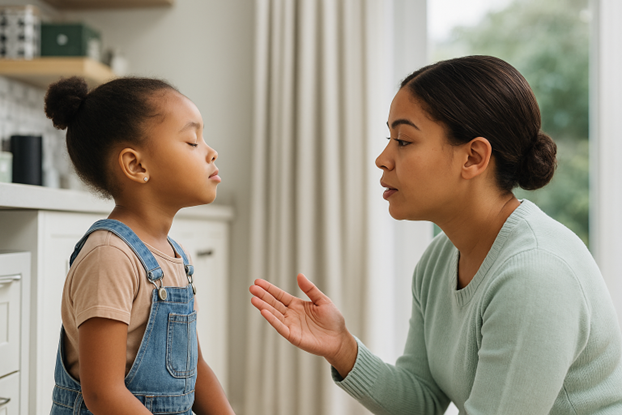
Co-dependency not only affects your romantic relationship, it shapes your parenting style too. When you lose sight of your own needs, you may:
- Become overly enmeshed with your child, blurring emotional boundaries.
- Struggle with discipline because you’re afraid your child won’t like you.
- Enable unhealthy behaviors in your child, mistaking this for love or support.
- Teach your child (unintentionally) that their worth depends on others’ approval.
Children raised in a co-dependent dynamic often grow up to repeat the same patterns. They may become people-pleasers, suppress their emotions, or enter into co-dependent relationships themselves.
Healing begins with awareness.
The good news is that co-dependency is not a life sentence, it’s a pattern that can be recognized, understood, and changed. With support, parents can learn to:
- Set healthy emotional and physical boundaries.
- Build self-worth from within rather than through external validation.
- Model emotional independence for their children.
- Reconnect with their identity outside of their roles as a parent or partner.
If you’re reading this and recognizing parts of your relationship or parenting style, you’re not alone. And more importantly, you can break the cycle.
Let’s begin the journey together.
Reach out today to book your introductory free 30 -minute session with me. We will discuss the value of how signing up to my Peaceful Parenting Package Program.
The program offers a safe space to unpack these dynamics. Together, we will explore your family history, uncover inherited emotional patterns, and create practical tools to shift from co-dependence to healthy connection.
Citations:
- Mental Health America. Co-dependency. https://www.mhanational.org/co-dependency
- Psychology Today. Understanding Co-dependency. https://www.psychologytoday.com/us/basics/codependency
- Healthline. What Is Co-dependency?. https://www.healthline.com/health/codependency