
How to Protect Your Child’s Emotional Well-Being
Learn how parental alienation affects children and why keeping them out of conflict matters.
This article, written by me, Roberta Shagam, an experienced, parenting coach, with additional credible sources and a warm, supportive call-to-action, is a guide to supporting healthy relationships after separation.
Parental Alienation: Let’s Keep the Kids Out of the Crossfire
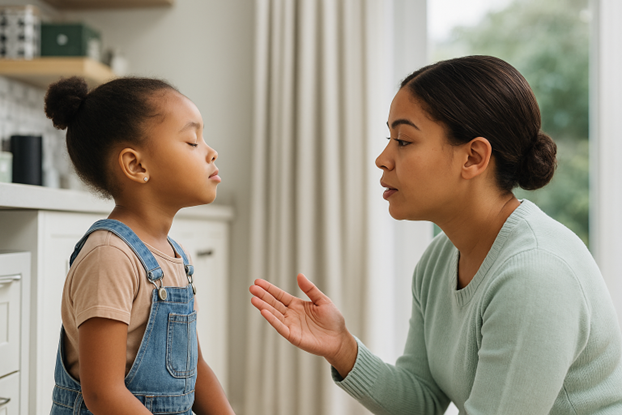
As a parenting coach, I’ve walked alongside many caregivers trying their best in very difficult circumstances. Separation and divorce are never easy, but when emotions turn into weapons, children often suffer the most. One of the most harmful patterns I see is parental alienation, a situation where one parent (sometimes unknowingly) manipulates a child to turn against the other parent.
Let’s be real. Parenting after a breakup can feel like walking a tightrope. You’re juggling your emotions, piloting co-parenting schedules, and trying to make sure your child is okay. But in all of this, there’s one non-negotiable: Children should never be used as pawns or messengers. Ever.
What is Parental Alienation?
Parental alienation occurs when one parent actively or passively undermines a child’s relationship with the other parent.
This might look like:
- Speaking badly about the other parent in front of the child.
- Withholding visits or making the child feel guilty for wanting to spend time with the other parent.
- Portraying the other parent as unsafe, unloving, or uninterested, even when this isn’t true.
This behavior can create confusion, fear, loyalty binds, and long-term emotional damage. Over time, the child may reject the alienated parent, not because of what that parent has done, but because they’ve been caught in the middle of a power struggle.
Why It Harms the Child
When children are put in the middle, they may:
- Feel forced to choose sides.
- Experience anxiety, depression, or self-esteem issues.
- Lose a meaningful connection with a loving parent.
- Struggle to form healthy adult relationships later on.
I am in full agreement with the findings of The American Psychological Association and other child development experts who are clear: children benefit from strong, secure relationships with both parents, whenever it’s safe and possible.
How to Avoid Alienation (Even When Emotions Run High)
Let’s be honest: it’s hard to stay neutral when you’ve been hurt. But acting out of spite or anger, no matter how justified it feels, can leave lasting scars on your child. Here’s how to keep their best interests front and centre:
- Pause before you speak. If you feel like venting, talk to a friend or a coach, not your child.
- Stick to facts, not feelings. Avoid name-calling or blame, even if the other parent has made mistakes.
- Encourage connection. Let your child love both parents without guilt or confusion.
- Create safety. Kids thrive on routine, structure, and knowing they don’t have to “fix” grown-up problems.
Let’s Work Through It Together
If you’re struggling with the weight of co-parenting conflict, you’re not alone. It’s tough, it’s draining, and it can feel overwhelming. But there is a way forward.
Let’s talk. I offer supportive, solution-focused online meetings where we tackle challenges like parental alienation with care, understanding, and practical tools you can implement right away. There’s no judgment here, just a safe space to unpack the chaos and bring some calm back into your parenting journey.
Contact me today, and let’s work through this together. Your child deserves peace. And so do you.
Citations:
- American Psychological Association – Children and Divorce
https://www.apa.org/topics/divorce-child-custody - Psychology Today – Parental Alienation: What Is It and Who Does It?
https://www.psychologytoday.com/us/blog/co-parenting-after-divorce/202002/parental-alienation-what-is-it-and-who-does-it - National Library of Medicine – Parental Alienation and the Impact on Children
https://www.ncbi.nlm.nih.gov/pmc/articles/PMC7913137/ - Association of Family and Conciliation Courts (AFCC) – Understanding Alienation
https://www.afccnet.org/Portals/0/PublicDocuments/2016_January_AFCC_ParentingCoordination_Guidelines.pdf
Psychology Today – How Parental Alienation Hurts Kids
https://www.psychologytoday.com/us/blog/the-long-reach-childhood/202110/how-parental-alienation-hurts-kids