In this article, I am going to share something many parents and teens struggle with; valuing oneself.
Whether it’s at work, in friendships, or even within your family, there are times when you may feel ignored, excluded, or taken for granted. These experiences can hurt deeply and if we don’t handle them with care, they can shape the way we see ourselves and how our children learn to value themselves.
The truth is that self-worth isn’t determined by how others treat us. It’s shaped by how we choose to respond. And just as important, our children are always watching. When we set healthy boundaries and honor our value, we model resilience that they’ll carry into their own relationships.
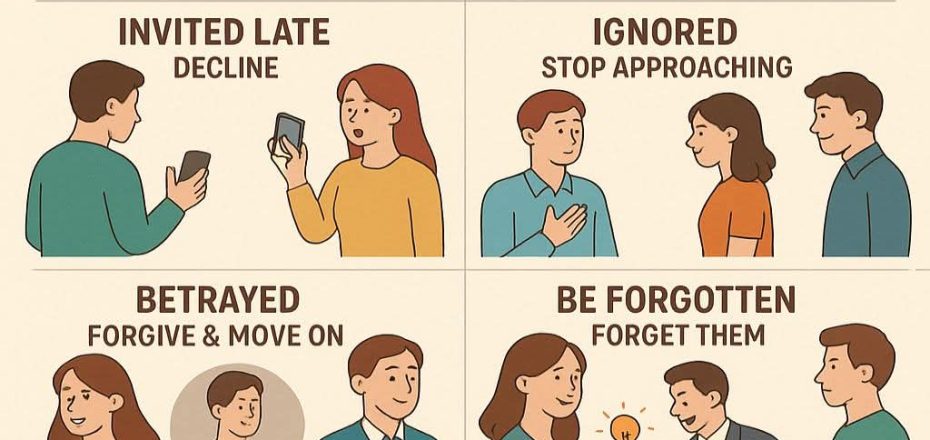
The guide below offers eight practical ways to value yourself in difficult situations.
The Experience – The Response
1. Not Appreciated – Keep Your Distance
When your efforts aren’t noticed or valued, it’s not a reflection of your worth. Step back, protect your energy, and focus on spaces where you are respected. This isn’t about punishment, it’s about prioritizing your well-being.
2. Not Invited – Don’t Go
Exclusion can sting but pushing yourself into places where you’re not wanted only deepens the wound. Instead, create your own experiences or surround yourself with people who welcome you wholeheartedly.
3. Invited Late – Decline
When someone only thinks of you at the last minute, it can leave you feeling like an afterthought. It’s okay to say no. Declining politely reinforces that your time is valuable and that you deserve to be included intentionally.
4. Ignored – Stop Approaching
Chasing attention rarely leads to connection. If you’re being ignored, it’s a sign to redirect your energy. Relationships should flow both ways, choose the ones where you are seen and valued.
5. Betrayed – Forgive & Move On
Betrayal hurts but holding on to anger only hurts you more. Forgiveness doesn’t mean forgetting or excusing bad behavior, it means freeing yourself from resentment so you can move forward with peace.
6. Be Forgotten – Forget Them
If someone consistently leaves you out of their life, it’s a message. Don’t fight for a place where you’re not remembered. Instead, invest in people who cherish your presence.
7. Insulted – Outshine Them with Success
Words can wound, but your response can heal. Rather than sinking to the level of insult, rise above it. Success, whether personal growth, joy, or achievement is the strongest answer to negativity.
8. Used – Set Firm Boundaries
Being used can leave you drained and resentful. The solution? Clear, firm boundaries. Boundaries don’t push people away, they protect your time, energy, and heart, allowing healthier relationships to thrive.
.
Why This Matters for Parents and Teens
As parents, we sometimes put ourselves last, hoping to avoid conflict or keep the peace. But when we continually accept poor treatment, we silently teach our children that this is normal.
By practicing self-value, whether that means saying no, forgiving wisely, or setting boundaries, you show your children that respect is non-negotiable. This empowers them to create healthier friendships, partnerships, and work relationships in their own futures.
Conclusion
Valuing yourself doesn’t mean being harsh or unkind. It means protecting your peace, honoring your worth, and modeling healthy relationships for your children. When you stand tall in your value, your family learns to do the same.
If you’d like support in building these skills for yourself and your children, I’d love to help. I invite you to a free, no-obligation 30-minute online meeting, where we can explore how my 12 x 60-minute Peaceful Parenting Package Program can bring more resilience, boundaries, and calm into your family life.
Citations:
- https://positivepsychology.com/self-worth/
- https://psychcentral.com/blog/the-power-of-self-worth-recognizing-your-value
(Graphic: Acknowledgement to LinkedIn)