
Words shape children, spouses, and family relationships. Discover how language influences mental health, parenting, and emotional wellbeing.
Introduction
As a Behavioral Parenting Coach, I’ve witnessed time and again how the words spoken within a family leave marks, sometimes gentle, sometimes deep. The things we say to our children, our partners, and even to ourselves are absorbed and carried for years. What may feel like a fleeting remark in the heat of a stressful day can take root in a child’s memory, shaping their self-worth and the way they communicate with others.
Words are not just tools of communication; they are emotional imprints. Whether spoken with kindness or sharpness, they carry weight. And when children hear spouses speak to one another, especially in front of them, the impact can echo long after the moment has passed. As parents, we need to forever be mindful that we are role models and that children emulate what they witness. We cannot say one thing and do another. Furthermore, would it not be disingenuous to send our children double messages by demonstrate the exact opposite for which we may reprimand them?
Why Words Matter
Words have the power to inspire, encourage, and strengthen bonds. They also have the power to wound, diminish, and create distance.
- A kind word can calm a child’s anxiety.
- A harsh word can fuel insecurity and self-doubt.
- A loving exchange between parents can make children feel safe.
- A critical, disrespectful remark between spouses can create fear, confusion, and mistrust.
Children are like sponges. They don’t just hear our words; they absorb the tone, the emotion, and the context. When we model communication that is filled with respect and compassion, we give our children a framework for healthy relationships.
The Subtle Power of Language
Sometimes, it’s not even the word itself but the way it’s used. Consider the difference between:
- “Why haven’t you done this yet?” (accusatory, critical)
vs. - “I noticed this wasn’t done, can I help, or was there a reason?” (curious, supportive).
The first triggers defensiveness and shame. The second invites conversation and problem-solving.
When spouses consistently use accusatory language with one another, especially in front of children, those little ears hear more than just the words. They sense the emotion. They learn how conflict is handled. They may even internalize the negativity and carry it into their own relationships.
Words may sting or sooth, sometimes even more than physical actions.
The Impact on Children
Words spoken to children in their formative years often become part of their inner voice.
- A child who hears, “You’re lazy” may grow into an adult who doubts their ability to succeed.
- A child who hears, “I believe in you” will likely carry confidence and resilience.
- A child who witnesses parents insulting each other may fear instability or believe that disrespect is a normal part of relationships.
Bullying, teasing, and verbal criticism, even when brushed off as “just words”, can leave scars deeper than physical wounds. Unlike bruises that fade, the emotional memory of cruel words can last a lifetime.
We need to model the way we want our children to become. Caring, thoughtful, considerate and kind people acquire those attributes through their environment from their primary caregivers in their formative years.
The Impact on Spouses / Partners
Spouses / partners are often caught up in the stress of daily life. Frustrations spill over, and words are spoken quickly and without thought. But when those words are consistently negative, they can erode trust, affection, and partnership.
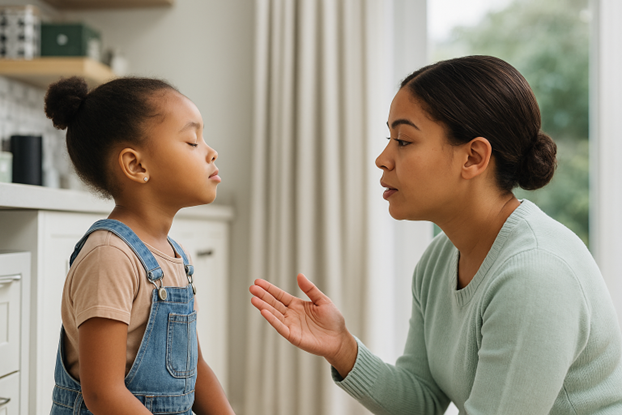
Children notice everything. When they hear mom and dad belittle each other, it undermines their sense of safety. When they witness gentle, respectful communication, it reassures them that disagreements can be worked through with love and dignity.
Moving Forward with Care
So how do we move forward more thoughtfully?
- Pause before speaking. Ask yourself: Is this constructive or destructive?
- Model respect. Even in conflict, show your children that disagreements can be handled without cruelty.
- Reframe criticism. Shift from blame (“You never listen”) to observation and request (“I feel unheard when I talk. Can we try again?”).
- Apologize when needed. Children learn humility and accountability when they see parents own their mistakes.
- Practice affirmation. Make space for words that build up rather than tear down.
Words can either build bridges or create walls. Choosing them with care helps strengthen emotional wellbeing in children, in spouses, and in ourselves.
Conclusion
As parents, caregivers, and partners, we hold enormous influence with the words we use. They can either nurture a child’s growing self-esteem or chip away at it. They can either strengthen a marriage in front of little watching eyes or weaken it. The good news? We always have the power to pause, reframe, and repair.
If you find yourself struggling with communication in your family, know that you can change this. Together, we can explore healthier ways of speaking, listening, and connecting.
I invite you to schedule a free, no-obligation 30-minute online meeting with me to talk through your family’s challenges. It could be the first step toward a calmer, more peaceful home.
We can talk about my Peaceful Parenting Package Program and discuss whether you may wish to sign up to 12 x 60-minute sessions wherein you may bring your challenges to our online meetings. I will walk the journey alongside you and share the tried and tested methods that have worked for many of my clients over the years. I will equip you with a toolbox in a safe space without judgement.
Contact me for further information. I am happy to walk alongside you on your path to peace.
Citations:
Mayo Clinic. (2023). Verbal abuse: How words can hurt and impact mental health. Retrieved from: https://www.mayoclinic.org/healthy-lifestyle/adult-health/in-depth/verbal-abuse/art-20050950
American Psychological Association (APA). (2023). The lasting impact of words on children’s development. Retrieved from: https://www.apa.org/monitor/2023/03/child-development-words